Sign Language
Summary
Section titled “Summary”Sign language is a visual language used primarily by people who are Deaf and hard of hearing. The hands, facial expressions, and other body language convey the meaning of language. In the U.S. and Canada, American Sign Language is the most widely used form. Most countries have their own unique sign language. In each country, sign language can be as different from the local spoken languages or other sign languages as German is from Japanese. Sign language is the first language for many people in the Deaf and hard-of-hearing community, although this varies by region. While some people can lipread and vocalize, sign language is preferable for most members of the Deaf community. For full accessibility, it is best to have sign language available in all public spaces and media.
Overview
Section titled “Overview”Visual structure and grammar
Section titled “Visual structure and grammar”Spoken languages have a linear structure; we can speak only one word or phrase after another. Meanwhile, sign languages are non-linear: elements like spatial organization, movements, and facial expressions can simultaneously add further details to the message. While spoken language is similar to reading a novel, sign language is closer to reading comics.
Some interesting facts about sign languages include:
- Facial expressions and body language provide meaning; they are an integral part of grammar and vocabulary.
- The position and movement of signs add meaning to the underlying concept.
- The word order is usually “subject-object-verb” for sentences, although a sign language sentence may contain more information than is usual in spoken language.
- Many sign languages make use of “fingerspelling,” in which hand movements and hand shapes are used to correspond to letters in a spoken language.
Cultural importance
Section titled “Cultural importance”Similar to spoken minority languages, sign languages are not just a means of communication for the Deaf, but also part of their identity. It is a cultural factor that allows them to communicate easily, build community and relationships, and helps keep traditions and share experiences.
Different countries - different sign languages
Section titled “Different countries - different sign languages”There is no truly international sign language, although the artificial International Sign Language combines commonly recognized gestures, visual signs, and a simplified grammatical structure. Each country has its local sign language or sign languages, and, in many cases, these languages have their own dialects.
The family tree of Sign Languages exists, but the relationship is not the same as the relationship of spoken languages. For example, we know that British English and American English have common roots; they are dialects of the same language. Meanwhile, American Sign Language (ASL) and British Sign Language (BSL) are very different, built on entirely different logics. ASL has more symbolic handshapes (classifiers, words), while BSL uses more fingerspelling. American Sign Language was historically influenced by French Sign Language rather than British Sign Language.
Even with these differences, the Deaf people of different nations can often understand each other and communicate successfully after a short “learning period.” The visual nature of sign languages offers common roots, symbols, and metaphors that help them find common linguistic points to start a conversation successfully.
Role in community and access
Section titled “Role in community and access”People can acquire sign language naturally as a mother tongue or through a conscious learning process.
Those who are Deaf, have a Deaf family or siblings, or are CODAs (Children of Deaf Adults) are usually native sign language users. Deaf, hard-of-hearing, and hearing people can be native sign language users if they grow up surrounded by a sign language community.
You can also learn sign language as a second language in social settings by getting involved with the Deaf Community or in formal settings by taking a sign language course.
Sign language and accessibility
Section titled “Sign language and accessibility”Many countries also have requirements that address the need for sign language interpretation in spaces beyond the Internet. In the U.S., the Americans with Disabilities Act (ADA) addresses this requirement. Other countries often have similar requirements affecting public communications. This reasoning applies to physical public venues, such as theaters and critical public announcements. Native sign language speakers are more assured of accurately understanding information if they do not need to translate it.
From a web accessibility perspective, adding sign language interpretation to videos is a great way to help people who are native sign language users. It is more helpful for these users, as the written captions are usually a second language and therefore require more cognitive processing to understand.
According to the Web Content Accessibility Guidelines (WCAG) (the international standard for web accessibility), you are not required to add sign language interpretation to digital content, but it is a best practice. Adding sign language interpretation to the content is an excellent additional functionality to accompany the audio content of videos or complex text content. People who natively speak Sign Language will benefit from it greatly. In some countries and in some contexts, you may be required to add sign language interpretations to certain types of videos. Some places require sign language interpreting on certain public broadcasts. For example, sign language interpreting is often required for emergency announcements.
Meanwhile, you must add captions to videos, as this is a WCAG requirement. See Captions (Ta11y) for more information.
Who is Helped
Section titled “Who is Helped”- People who are native in sign language (culturally Deaf, CODA, etc.) and learned their region’s spoken language as a second language. Sign language replaces and supports written content with a visual channel.
- People familiar with sign language as a second language (deaf and hard-of-hearing people, interpreters, friends, etc.). Sign language supports written or audio content with visual content.
- People learning to use or interested in learning sign language, like hearing family members, friends, teachers, or students.
Guidelines
Section titled “Guidelines”Laws and Standards
Section titled “Laws and Standards”he Web Content Accessibility Guidelines (WCAG) form the basis for sign language web accessibility requirements. In WCAG, Success Criterion 1.2.6, Sign Language Prerecorded recommends adding sign language to all prerecorded audio content in synchronized media. It is a level AAA criterion, which means it is not usually required. However, it is a best practice for any organization or service provider, especially those who serve deaf clients or want to raise awareness about deafness, sign languages, or disabilities in general.
For online content, it is advisable to add sign language interpretation to:
- all pre-recorded videos with audio content,
- pre-recorded audio-only content, such as podcasts, and
- complicated text content.
Most countries have accessibility requirements to address the needs of people with disabilities in physical spaces and other venues beyond the Internet.
- In the U.S., the Americans with Disabilities Act (1990) defines sign language requirements at places of public accommodation, such as theaters, hospitals, and schools.
- ADA guidelines affect government offices, businesses, and nonprofit organizations that serve the public. The guidelines require that these organizations provide ways to communicate effectively with people with disabilities.
- In some cases, this means sign language interpreters are required. For example, an emergency announcement by a government office or a complex meeting with a lawyer or doctor usually requires a sign language interpreter. In situations where understanding is less critical, other methods of communication may suffice.
- In the European Union, the European Accessibility Act (2019) aims to standardize accessibility requirements for specific products and services. This Act seeks to benefit businesses, individuals with disabilities, and older individuals while clarifying the existing accessibility obligations under EU law. For web content, the implementing standard incorporates the WGAG 2.1 requirements and includes the same Sign Language-related rules as the international standards.
- In Canada, the Accessible Canada Act (2019) is in place, in addition to local legislation like the Accessibility for Ontarians with Disabilities Act. These acts apply to public, educational, and business entities and include requirements like providing a Sign Language Interpreter for people who are deaf and hard of hearing for situations involving customer service, educational, or administrative settings. Accessible websites for sign language users are also part of the requirements.
Sign language interpreters
Section titled “Sign language interpreters”Sign language interpreters can translate speech into sign language and vice versa. This is a learned skill that requires more than simple fluency in both languages. Certified interpreters have the training necessary for this, as well as ethical responsibilities such as confidentiality. It is important to use certified interpreters and to provide them with information about technical terms and jargon that they may need to provide accurate translations.
In many countries, including the U.S. and Canada, the standard practice is to have more than one interpreter for events longer than one hour. Interpreters usually switch every fifteen minutes.
In some countries, you can now access sign language interpretation through a subscription service. Organizations and individuals can subscribe to these services. In a subscription, a certain number of hours with on-call access to interpreters is included. Examples in the United States include Convo and Sorenson Communications.
Sign language interpretation for online content
Section titled “Sign language interpretation for online content”Multiple options are available to add quality Sign Language translation to live online events and pre-recorded video or audio files. The interpretation should be synchronized; a summary or a considerably delayed translation of the audio content does not meet the requirements.
- Interpreter on stage
- The event must position a sign language interpreter next to the speaker. The event records the speaker and interpreter with the same camera. The interpretation is in sync with the audible content (with a natural lag time while processing the speech on the spot). Both the speaker and the interpreter must be visible at all times. For a video recording, you cannot float a single camera between the two parties because deaf viewers will miss audio content while the interpreter is off-screen. Although this method is common at live events, people seldom use it for video recordings because of the poor image quality. The interpreter appears small due to the distance, and the handshapes may be challenging to see clearly, especially for sign language users with low vision.
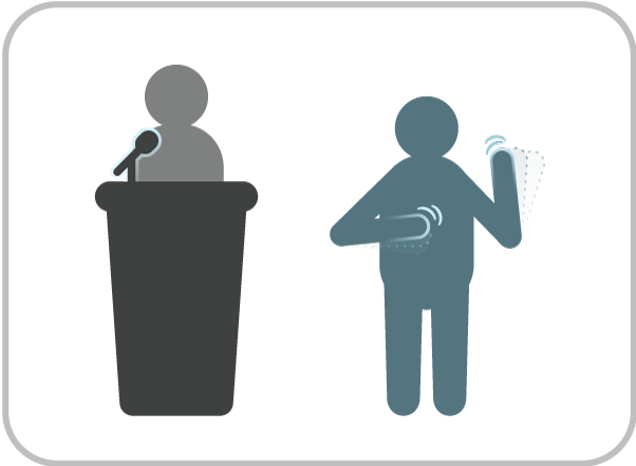
Figure 1: Interpreter on Stage - Video in video
- The interpreter is translating the speaker simultaneously, but it looks like the event has recorded the speaker and interpreter with separate cameras. Both the speaker and interpreter appear on the screen at the same time, with the interpreter shown in a separate window. The proportion of the camera images may vary from 1:1 to a smaller, embedded video size. This scenario can be used in live settings or as a recording. People often use this method of interpretation for live public announcements and political occasions. The interpreters work in the same place and time as the speaker, but from a separate room, recorded by a second camera. In pre-recorded settings, the interpreter can also translate after the actual event, and a video editor merges the two camera images during the video production.
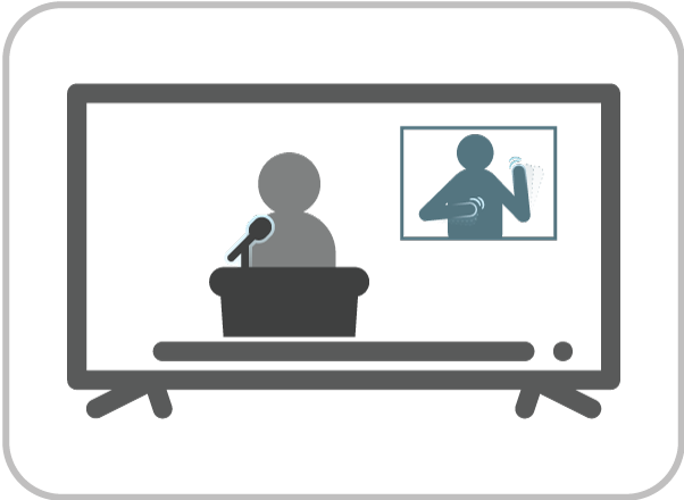
Figure 2: Video in Video - Sign Language Video Library
- a collection of videos that serve as a glossary to complex content or a library to offer an additional set of information presented in sign language; this is typically available in the form of prerecorded videos. There is a nice example of a sign language video library on the Described and Captioned Media Program (DCMP) website.
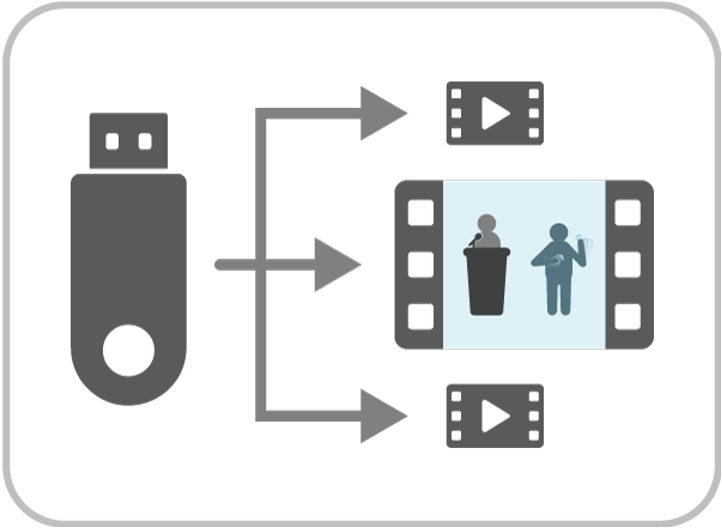
Figure 3: Sign Language Video Library
Real-Time Interpretation for Online Events and Meetings
Section titled “Real-Time Interpretation for Online Events and Meetings”A special case of sign language interpreting is online events where part of the expected audience is Deaf and requires real-time interpretation. This requirement may apply to any virtual meeting, conference, webinar, or online event.
There are three primary methods of providing interpretation for online events and meetings:
- In-person interpreting
- A live online sign language interpreter is visible in real-time. The most commonly used venues for this are online conference and meeting tools, as well as embedded windows within a website or an app. The interpreter is using the same application as the speaker, but viewers see them in a separate window. This method requires the interpreter to be physically available at the same location as the event’s speakers.
- Video Relay Service (VRS) interpretation
- An online sign language interpretation service where a human (not artificial intelligence-based) interpreter is visible in real-time. The most commonly used venues for this are online conference and meeting tools, as well as embedded windows within a website or an app. The interpreter is using the same application as the speaker, but viewers see them in a separate window. This method combines live interpretation with remote presence and does not require travel from the interpreter. For this reason, it is becoming increasingly popular.
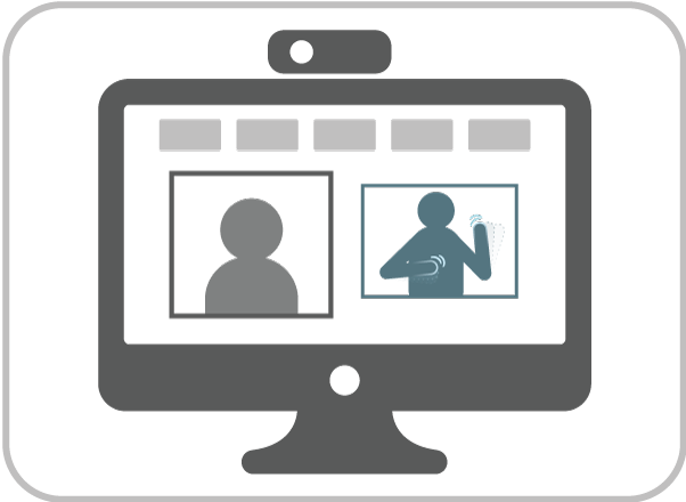
Figure 4: Video Relay Service - Interactive sign language avatar (not accessible)
- A virtual sign language interpreter, usually AI-based, to translate the written or spoken content into a sign language. You should not use AI-based avatars for sign language interpretation. An AI-generated interpreter currently cannot provide the human experience due to the low quality of avatars’ signing. At this time, such an avatar cannot be considered sufficient for an organization covered by a legal requirement to support sign language.
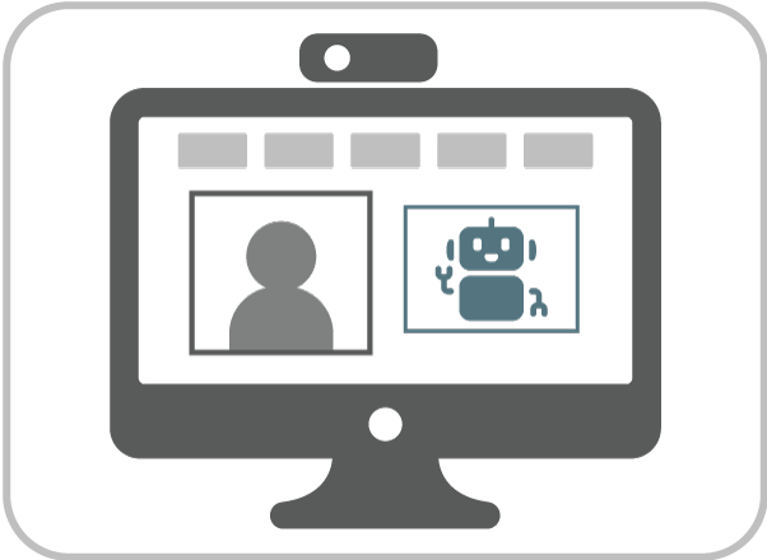
Figure 5: Interactive Avatar
Other key considerations for online events and meetings include:
- Pinning
- Many popular online conference tools have a Sign Language-friendly setting. This feature primarily enables pinning both the Speaker and the Sign Language Interpreter(s). Pinning allows you to enlarge and center the specified video feed to ensure that the audience always sees the speaker and interpreter. Besides the hearing Sign Language interpreter, a Deaf Interpreter or an International Sign Interpreter can also have their video pinned together with the Speaker when attending. You should pin the sign language interpreter’s video so that it is always on and large enough so that deaf participants can easily read their signing.
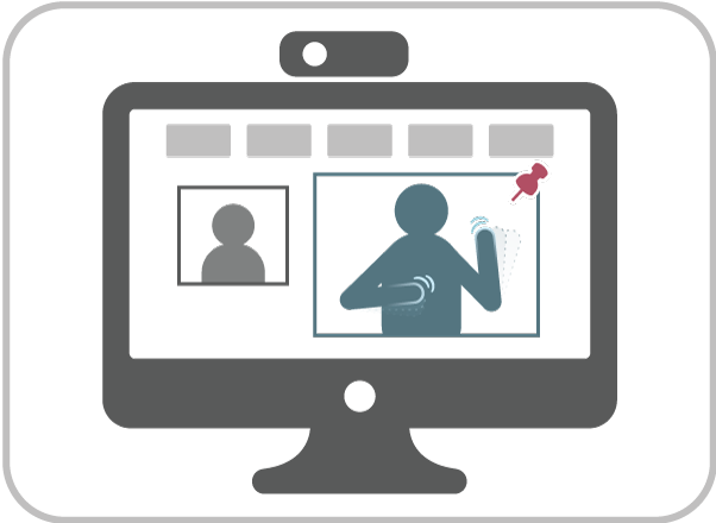
Figure 6: Pinning - Secondary application
- Most meeting applications have the option to share the screen display so that you can add a second application for the interpreter. You can resize and position the window of the secondary application independently of the meeting application, so you can ensure that viewers easily see the interpreter. The host must manipulate the window size to optimize both the shared screen and the interpreter. The host can remain pinned in the meeting application. A second view can be pinned for participants when speaking. The person who is Deaf or hard of hearing must be pinned when speaking. The advantage of using a second application to provide interpretation is that it allows the Deaf participant and the interpreter to talk to each other without interrupting the event.
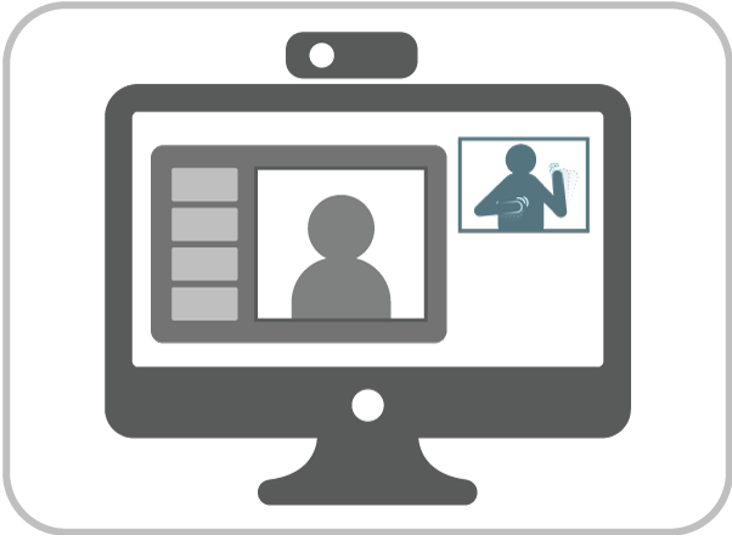
Figure 7: Secondary Application - Critical understanding considerations
- Interpretation is usually required for legal, medical, or official cases online, where a clear understanding by all parties is critical. An interpreter not only helps individuals who are Deaf understand what others say, but they also ensure that hearing individuals understand what Deaf people say. The interpretation is beneficial when Deaf individuals are not able to speak clearly or have low spoken language competency.
- International Sign
- An International Sign Interpreter is usually invited to internationally organized deaf events where the participants are native speakers of different sign languages. According to the World Federation of the Deaf (WFD), International Sign is a form of sign communication that combines commonly recognized gestures, visual signs, and a simplified grammatical structure. IS is an effective tool for basic international communication, although it lacks the full linguistic complexity of natural sign languages.
Currently, the following most popular online conference tools provide accessibility features, including the video settings necessary for a good online sign language interpretation experience: Zoom, Webex, Google Meet, and Microsoft Teams. Besides these, more and more new online meeting and conferencing tools are appearing that include accessibility settings supporting sign language interpretation. For information on complete accessibility requirements, see Virtual Events (Ta11y).
It is essential to provide captions in addition to Sign Language interpretation. Ideally, a human notetaker should generate the captions. Automated caption generators are widely available but are not entirely accurate and may make the content confusing or not understandable. For more information on captioning requirements, see Captions (Ta11y).
Sign language interpretation for in-person events
Section titled “Sign language interpretation for in-person events”Many of the interpretation methods and considerations that apply to live online events also apply to in-person events:
- Interpreter on stage
- The event must position a sign language interpreter so that the audience can clearly see them. In-person events may not always position sign language interpreters near the speaker, especially at events like plays or concerts. Interpreters must be well-lit and visible at all times. If Deaf audience members need to see the interpreter on the stage, they must be seated near the interpreter with a clear line of sight. Some events have large screens above or beside the stage where stage managers can project an enlarged image of the interpreter as well as the event itself. This arrangement allows for greater flexibility in seating. Other events, such as conferences, may require more than one interpreter if multiple meetings, presentations, or classes are part of the event. For information on complete accessibility requirements, see In-Person Events (Ta11y).
- Critical understanding considerations
- Much like online events, in-person events often require interpretation for legal, medical, or official discussions or announcements, where a clear understanding by all parties is critical. An interpreter helps Deaf individuals understand what others say, and they also ensure that hearing individuals understand what Deaf people say.
- Interpreters for gatherings
- For an in-person event where people mingle, talk with each other, or go between exhibits, an interpreter should be made available. Let attendees know where they can request an interpreter. This interpreter is best provided in person but can be provided through a video device. Learn more from In-Person Events (Ta11y).
- International Sign (IS)
- Similar to online events, in-person international deaf events may invite International Sign Interpreters, where participants are native speakers of different sign languages. IS can be helpful for basic international communication.
Resources
Section titled “Resources”In the United States and Canada, you can access a listing of certified interpreters from the Registry of Interpreters for the Deaf (RID). Larger organizations may have contracts with private providers of interpreting services. The National Association of the Deaf also maintains a listing of ASL interpretation resources across the United States. Many countries around the world, particularly in Europe and Latin America, also have national associations for deaf people that can help you find interpreters.
How to Test
Section titled “How to Test”To test if sign language interpretation is available for videos posted on a website, simply look for videos, buttons, or links that refer to additional content in Sign Language. These videos should also have closed captions, as they are necessary for a fully compliant experience.
For online meetings and conferences, ensure you use a meeting platform that allows Deaf participants and the Sign Language Interpreter to “pin” each other, providing a constant view of each other during video meetings.
In all cases, sign language interpreters must be:
- well-lit,
- always in view, and
- large enough to easily see hand and facial gestures.
References
Section titled “References”- WCAG Success Criterion 1.2.6 Sign Language Prerecorded, W3C
- ADA Requirements: Effective Communication, ADA.gov
- When is a sign language interpreter required by law? Jordan Matyas, 1818 Legal
- Human Rights for all deaf people, World Federation of the Deaf
- Directive (EU) 2019/882 on the accessibility requirements for products and services, European Union, EUR-lax
- Accessible Canada Act, Government of Canada, Justice Laws Website
- Accessibility for Ontarians with Disabilities Act, AODA.ca
- Learn Basic ASL (free online courses), Gallaudet University